Speakers
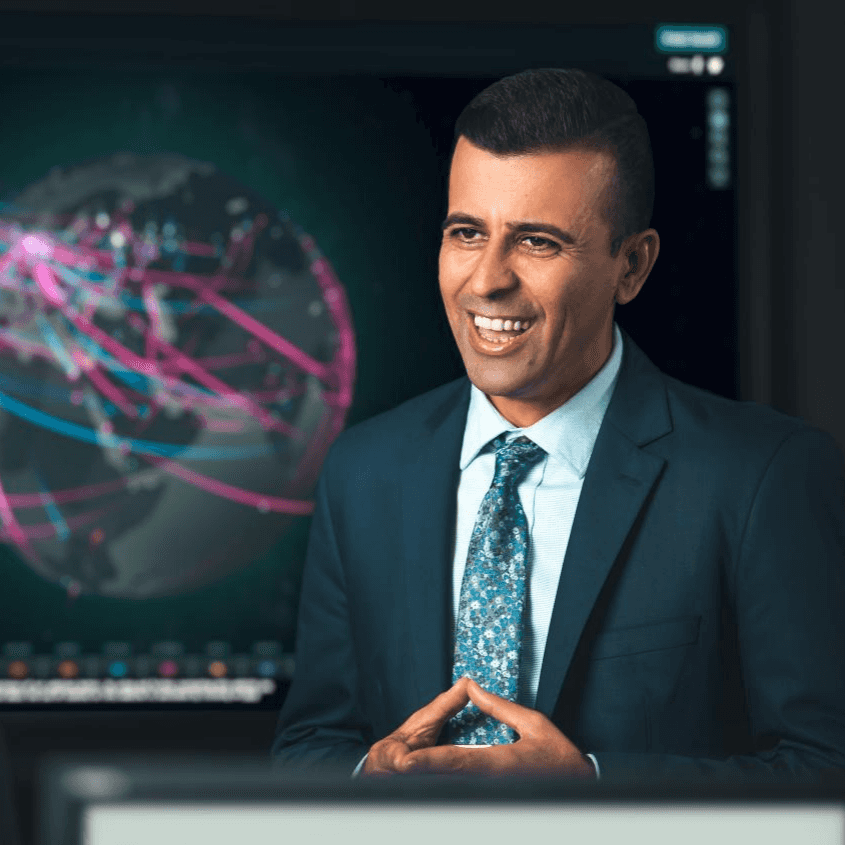
Marwan Omar, Ph.D.
Dr. Omar's Academic career has consistently focused on applied, industry-relevant cyber security, Data Analytics, machine learning, application of AI to cyber security and digital forensics research and education that delivers real-world results. He brings a unique combination of industry experience as well as teaching experience gained from teaching across different cultures and parts of the world. He has an established self-supporting program in machine learning application to cyber security. He has established a respectable research record in AI and cyber security exemplified in the dozens of published papers and book chapters that have gained recognition among researchers and practitioners (more than 272 Google scholar citations thus far). He is actively involved in graduate as well as undergraduate machine learning education including curriculum development and assessment. Dr. Omar has recently published two books with Springer on Machine Learning and Cyber Security and has also published research with IEEE conference on Sematic Computing. Additionally, Dr. Omar hold numerous industry certifications including Comptia Sec+, ISACA CDPSE, EC-Council Certified Ethical Hacker, and SANS Advanced Smartphone Forensics Analyst. Dr. Omar has been very active academia and the industry and he is currently serving as an associate professor of cyber security at Illinois Institute of Technology.
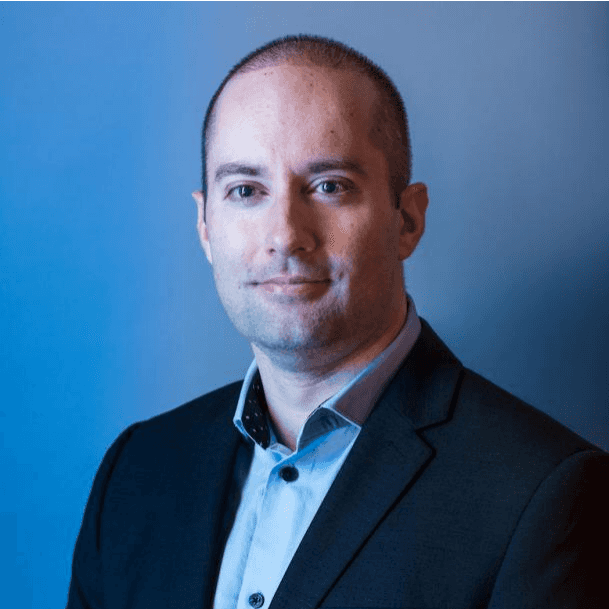
Roman Bauer, Ph.D.
Roman received his Bachelor's and Master's Degree in Computational Science and Engineering from ETH Zuerich, Switzerland. Afterwards, he did his doctoral studies at the Institute for Neuroinformatics (INI) at ETH Zürich and University of Zürich, working on simulations of cortical development. He then joined Newcastle University in September 2013 as a postdoctoral research associate and afterwards started his MRC fellowship project in September 2016 as an independent principal investigator. In June 2018 he took up an EPSRC UKRI Innovation Fellowship at the School of Computing and a joint affiliation with the Institute of Genetic Medicine, both at Newcastle University. In August 2020 he then became a lecturer at the Department of Computer Science, University of Surrey.

Michael Harre, Ph.D.
Dr. Harre's research combines the psychology of decision theory with artificial intelligence to understand complex social dynamics. Currently he's working on how to replicate a 'theory of mind' for AI and how AI communities co-create knowledge and can cooperate with humans. More generally Dr. Harre is interested in the psychology of AI: how can we use what we know of the mesoscopic scale of human cognition to advance our understanding of machine intelligence, i.e. beyond what is being done at the micro-scale of modelling neurons. He also has extensive experience in agent based modelling, economics, big data analytics, and game non-linear dynamics.
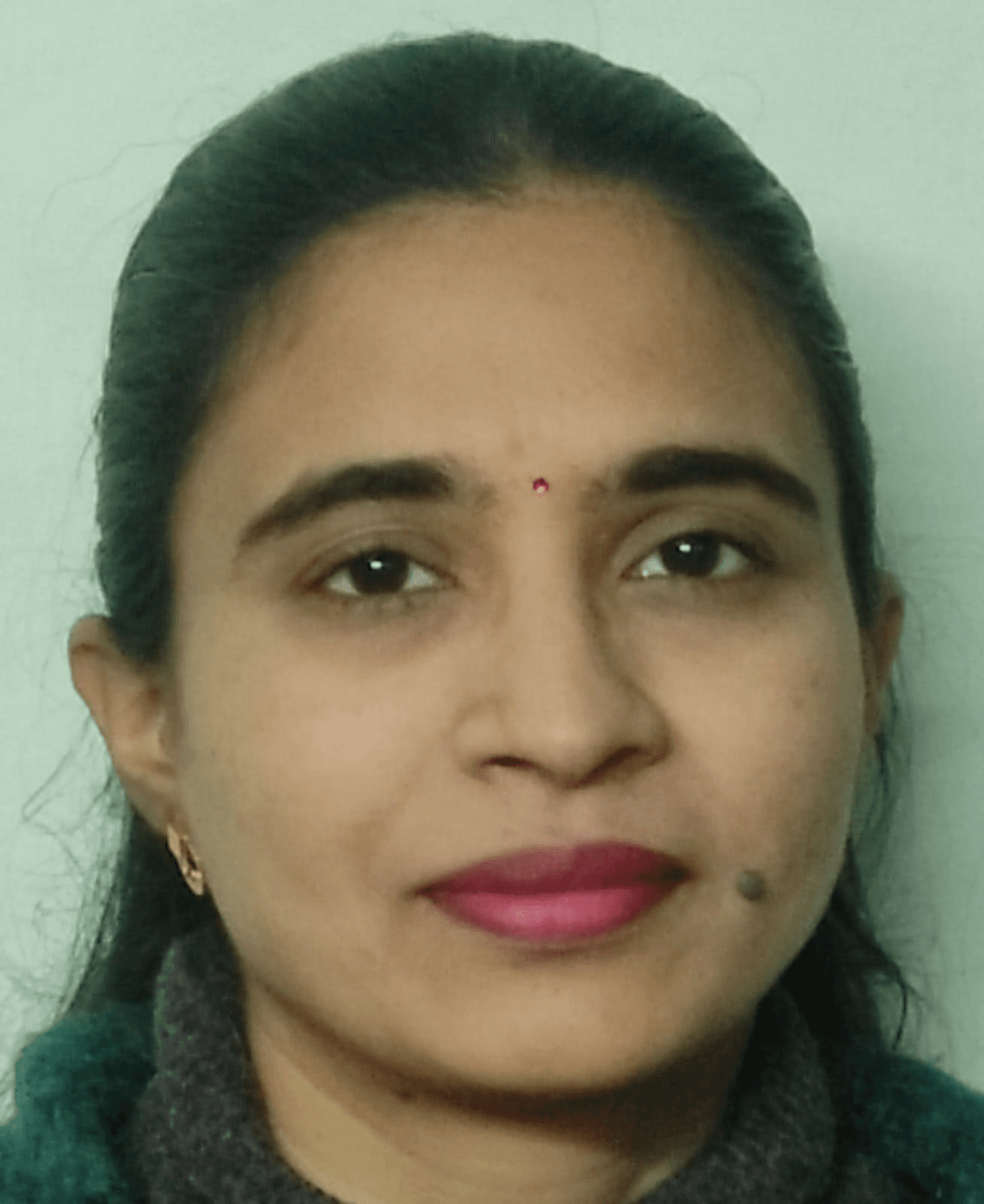
Richa Gupta, Ph.D.
Dr. Richa Gupta, is working as Assistant professor in the Department of Computer Science and Engineering, Jamia Hamdard, New Delhi, India. She has a total of 15 years of experience. She completed her Bachelor of Technology (B.Tech) in Information Technology from UPTU in 2004. Her interest in interdisciplinary work took her to University of Skovde,Sweden to pursue MS in Bioinformatics and completed in 2006. She has PhD in Computer Science and Engineering from Jamia Hamdard, India. She has been on working on areas where various fields of computer science can be implemented in healthcare. She is an active member of IEEE since 2001. She is also member of Institute for Engineering Research and Publication (IFERP) and life member of Indian Society for Technical Education (ISTE).
She has published number of research papers in SCI indexed and scopus indexed journals. She is also in reviewing committee of reputed journals. Her research areas are Bioinformatics, Machine learning, Healthcare, Data mining etc.

Festus Adedoyin, Ph.D.
Festus is a Fellow of the Higher Education Academy, a Chartered Management and Business Educator, and a Senior Lecturer at the Department of Computing and Informatics, Bournemouth University, U.K. His current research interest is in the application of Machine and Deep Learning, and Econometrics tools to research stories in Energy and Climate Change as well as Digital Health. Festus has contributed to several thematic areas in the UN's Sustainable Development Goals, and he is open to international research collaborations. Festus has taught at both postgraduate and undergraduate levels the following modules: Business Information Technology (Quality Assurer), Data Management (Quality Assurer), Economics of Information Security, Smart Systems (teaching team), and Research methods and Professional Issues
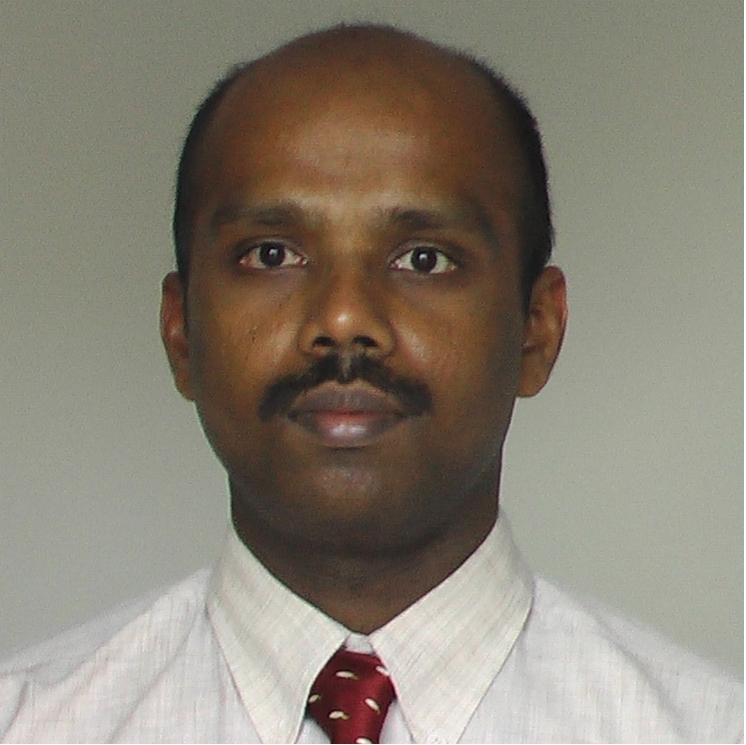
Anil Fernando, Ph.D.
Prof. Anil Fernando received his PhD in video processing from the University of Bristol-UK in 2001 and MSc in telecommunications from the Asian Institute of Technology-Thailand in 1997 and BSc(Honours-First Class) from the University of Moratuwa-Sri Lanka in 1995. He joined the Department of Computer and Information Sciences, University of Strathclyde, UK in August 2021 as a professor in video coding and communications and currently leading the video communications research group. Prior to that he has been in the University of Surrey, Brunel University in UK and the Asian Institute of Technology in Thailand as an associate and assistant professor. He has a very strong research and academic profile and is a world leading expert on video processing, coding and communications. He has published more than 400 international refereed journal and conference publications mainly in IEEE. He graduated more than 100 PhD students in video processing and communications and is currently supervising over 15 PhD students. Due to his major contributions to the video communications research, he was invited by many IEEE leading conferences in disseminating his research to a wider community through plenary, keynote and invited talks at professional meetings, workshops and conferences. His work has been highly recognised by the international research community and has won IEEE International Shall award and NAB 2020 award.
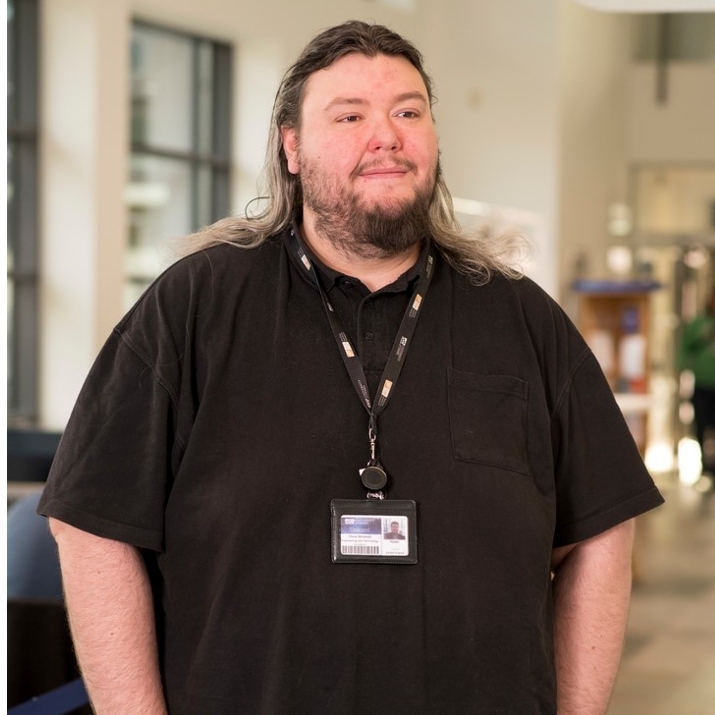
Christopher Windmill, Ph.D.
Dr. Christopher Windmill is a Lecturer in Computer Science and Computer Games Programming at the Department of Computing and Mathematics, College of Science and Engineering, University of Derby. He completed his EngD. In System Level Integration at the University of Glasgow in 2013, and his undergraduate MEng (Hons) in Electronics and Computer Science in 2007 from the University of Edinburgh. He currently lectures in: project management; game design and development; and networked and distributed systems. He has current research interests and projects in data visualisation using games engines, data management in digital twins, and games technologies in healthcare, with a particular focus on VR and AR visualisation devices.


Sometimes it is the people who no one imagines anything of, that do the things that no one can imagine.