-
 Workshop | Software Development Practices for
Digitally Augmented Traditional Business WorkflowsDERBY, UK MARCH 29, 2023
Workshop Title:
Software Development Practices for Digitally Augmented Traditional Business Workflows
Date:
March 29th, 2023 (GMT)
Organizer:
Department of Computing and Mathematics, College of Science and Engineering, University of Derby
Keywords:
- Software Engineering
- Computer Graphics and Human Computer Interaction
- Managing Software Projects
Workshop Chair:
Personal Bio:
Dr. Christopher Windmill is a Lecturer in Computer Science and Computer Games Programming at the Department of Computing and Mathematics, College of Science and Engineering, University of Derby. He completed his EngD. In System Level Integration at the University of Glasgow in 2013, and his undergraduate MEng (Hons) in Electronics and Computer Science in 2007 from the University of Edinburgh. He currently lectures in: project management; game design and development; and networked and distributed systems. He has current research interests and projects in data visualisation using games engines, data management in digital twins, and games technologies in healthcare, with a particular focus on VR and AR visualisation devices.
Workshop Committee Members:
Dr Patrick Merritt, Lecturer in Computer Science, augmented and virtual reality.
Dr Sam O'Neill, Lecturer in Computer Science.
Workshop Description:
Background:
Many industries still rely on simple data visualisations or textually formatted data for their business processes, while modern research has shown that gamification and improvement in interaction and visualisation can improve the usability and efficiency of these processes. Games engines such as Unreal and Unity can offer a low-cost approach to integrating mobile, web, desktop, and other platforms into a traditional workflow with high quality visualisations. This workshop intends to introduce software engineers to the core concepts of games engines and visualisations and how these can be applied to business workflows. Attendees will gain the key skills and knowledge that they will need to start their journey into understanding the role of gamification in traditional business workflows and the technologies that will enable these to be implemented to a variety of hardware platforms.
At the workshop attendees will look at how traditional workflows and business practices work, and through examples and discussion how we can approach using games engines and gamification to potentially improve these workflows and make them more accessible to end users. Attendees will then explore a simple visualisation task in the Unity games engine to give them an understanding of how data and games engines can be integrated and the benefits/difficulties that these integrations can bring. Following the workshop attendees will be encouraged to explore the areas of their businesses that could be improved through these methodologies and what collaboration and support they would need to do this.
Goal / Rationale:
The crossover between business understanding and technical development skills can be difficult to understand as undergraduate level courses typically focus on either business and management, or on technical skills such as programming. This workshop looks to support cross-disciplinary collaboration by exposing each side to the other's tools and requirements and to then support the development of ideas and projects where technology can provide better and more intuitive interfaces for business data. A simple example of this may be in data collection from staff - a single survey point is unlikely to capture the longitudinal feelings and efficacy of the staff and risks being skewed by recent events. By integrating a mobile application into the workflow staff issues can be captured close to the point of failure/success/completion giving better insight into day-to-day operational issues.
Through the discussion and exercises it is hoped that participants will come away with an understanding of the technical and business issues that can be addressed and begin to consider how the integration of games visualisation technologies could improve business workflows and management.
Scope and Information for Participants:
The workshop will address two themes:
(1) how traditional business data and workflows are visualised and interacted with;
(2) how games engines allow for the fast and effective deployment of software to cross-platform environments.
These two activities are intended to motivate and introduce to participants to games engine technologies and the capabilities therein for visualisation. With this knowledge the attendees will apply this to a simplified business visualisation model allowing them hands on experience. Discussion and lecture components will provide information and support for participants with different backgrounds. Additional contributors will be brought in to support the session as experts in games engine technologies and visualisations.
Highlights:
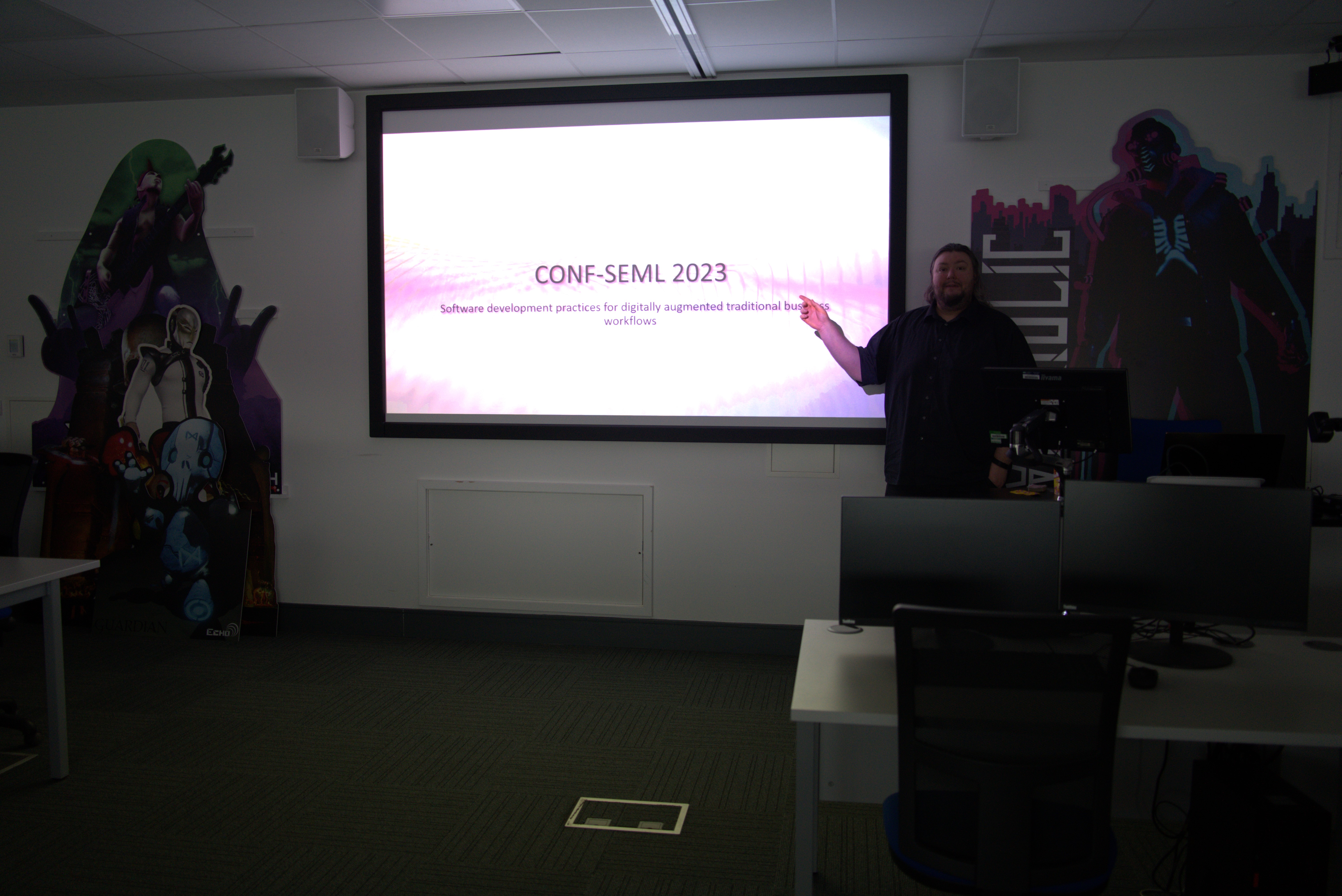
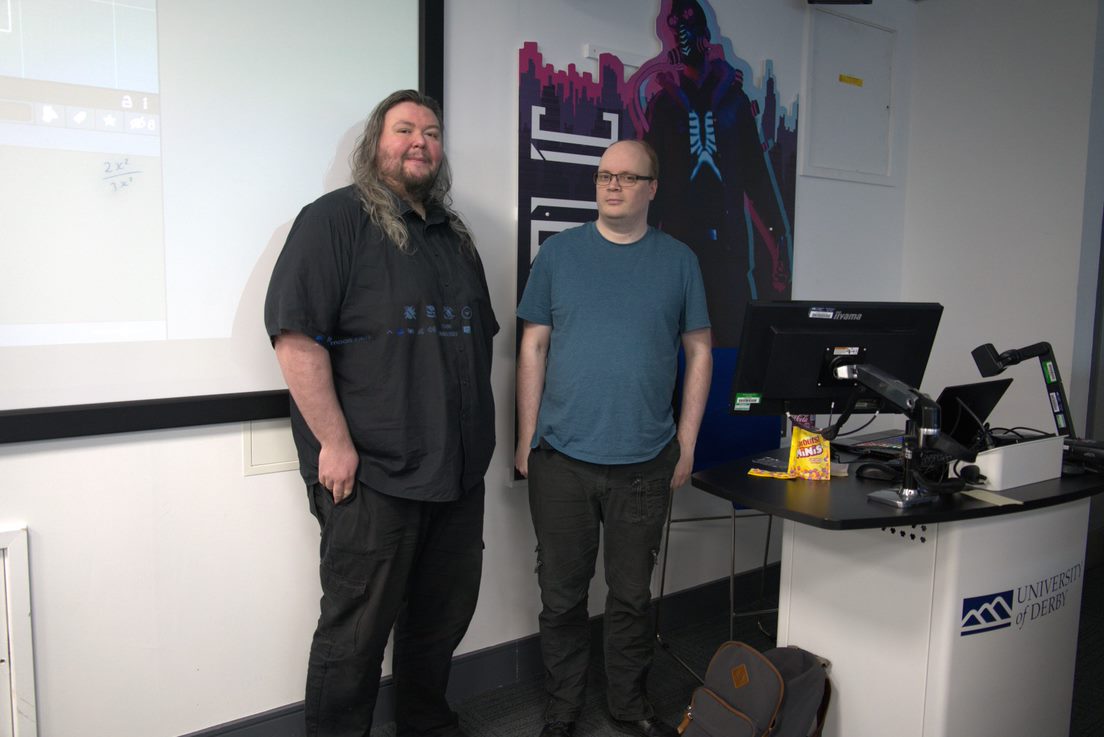
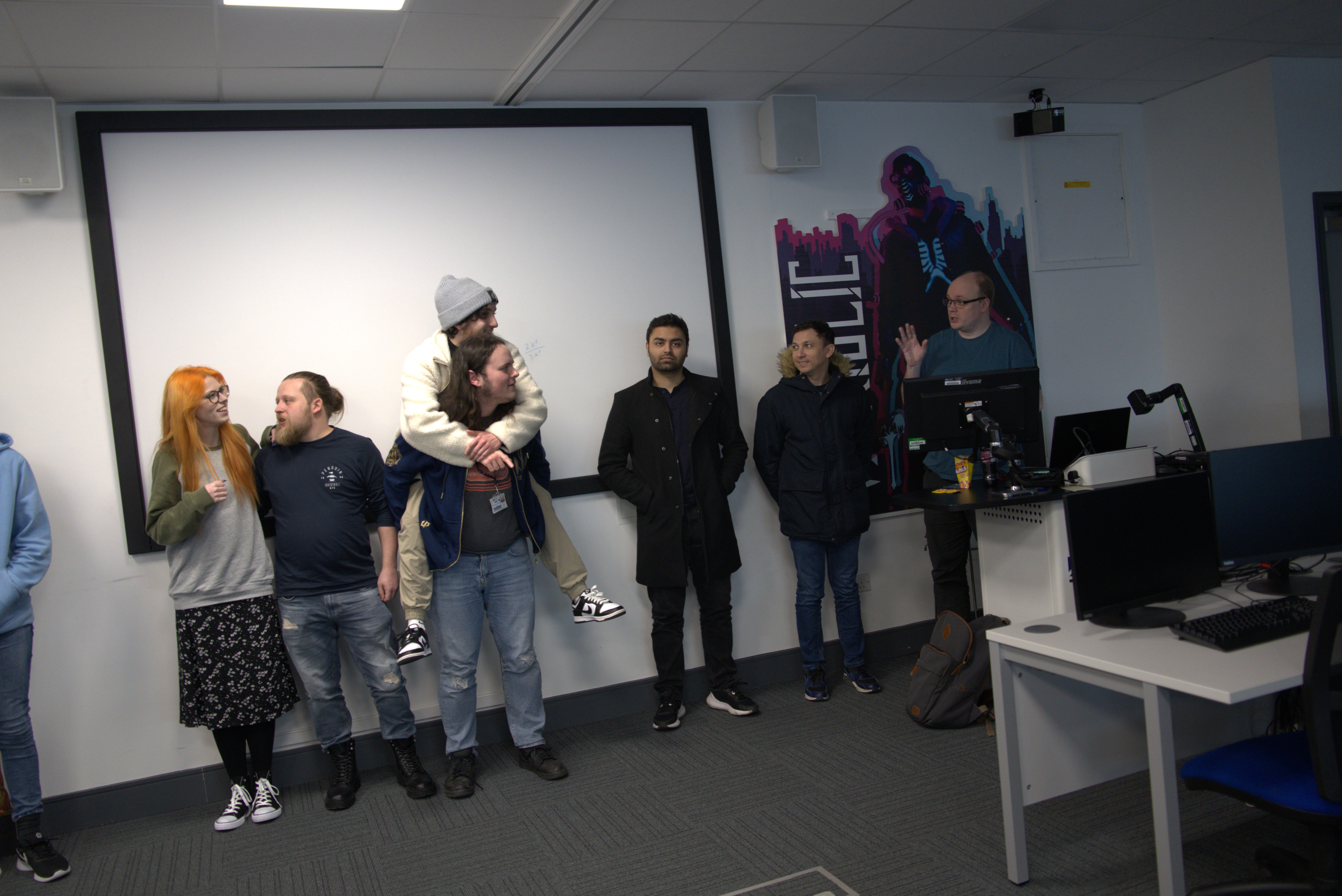
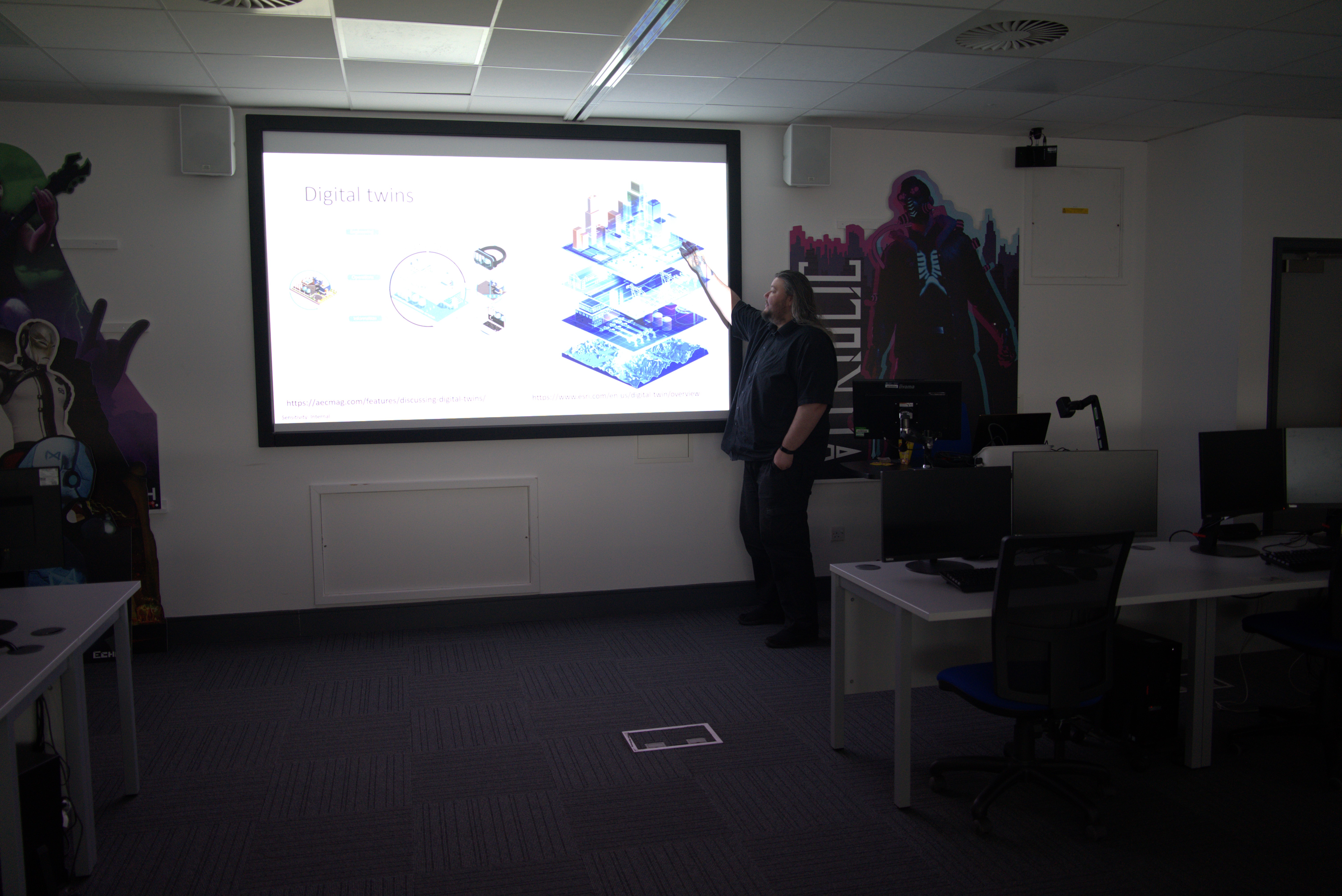
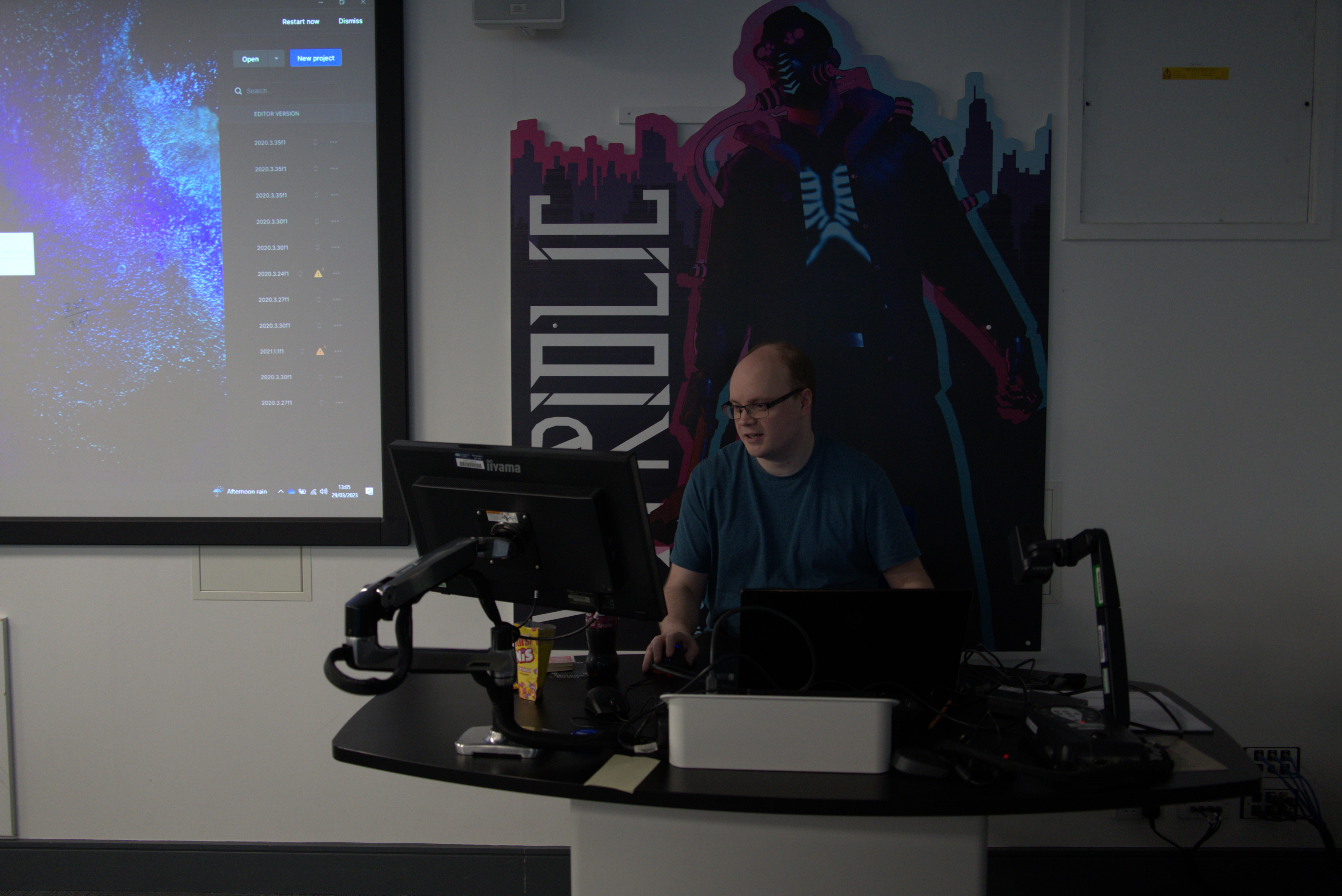
SEML 2023 Workshop - Software development practices for digitally augmented traditional business workflows with Dr Christopher Windmill and Dr Patrick Merritt.
This workshop looks at what traditional business workflows and processes are and how modern approaches such as digital twins and digital asset management systems are affecting these processes. The workshop looks at how process management systems can hide and obscure data and the processes through which we can approach the capture of this data. The workshop then provides a discussion on gamification models and techniques that apply to educational paradigms, and why they aren't necessarily suitable for these traditional business workflows. In the second part of the workshop we provide an introduction to bespoke gamified user interfaces using the Unity games engine and demonstrate a simple mechanism for displaying and gamifying data degradation.
Access to Workshop:
CONF-SEML 2023 Workshop: Software Development Practices for Digitally Augmented Traditional Business WorkflowsVenue:
Markeaton St Campus, University of Derby, Markeaton St, Derby, DE22 3AW, UK
VISA:
https://www.gov.uk/UK Visa Information
What you need to do
- Check if what you plan to do in the UK is allowed as a Standard Visitor.
- Check you meet the eligibility requirements.
- Check if you need to apply for a visa to visit the UK.
- Apply for a Standard Visitor visa online - if you need one.
Check you meet the eligibility requirements
You must have a passport or travel document to enter the UK. It should be valid for the whole of your stay.
You must be able to show that:
- you'll leave the UK at the end of your visit
- you're able to support yourself and your dependants during your trip (or have funding from someone else to support you)
- you're able to pay for your return or onward journey (or have funding from someone else to pay for the journey)
- you'll not live in the UK for extended periods through frequent or successive visits, or make the UK your main home
Check if you need a visa to visit the UK
Depending on your nationality, you'll either:
- have to apply for a Standard Visitor visa before you travel to the UK
- be able to visit the UK for up to 6 months without needing a visa
You can check if you need a visa before you apply.
If you do not need a visa, you must still meet the Standard Visitor eligibility requirements to visit the UK. You may be asked questions at the UK border about your eligibility and the activities you plan to do.


Sometimes it is the people who no one imagines anything of, that do the things that no one can imagine.